
 Travel
  Gift
Gift  Beauty Corner
 Viral
Viral 















OUR UNIVERSES
Enjoy and explore the themed experiences created for those who are looking for something more
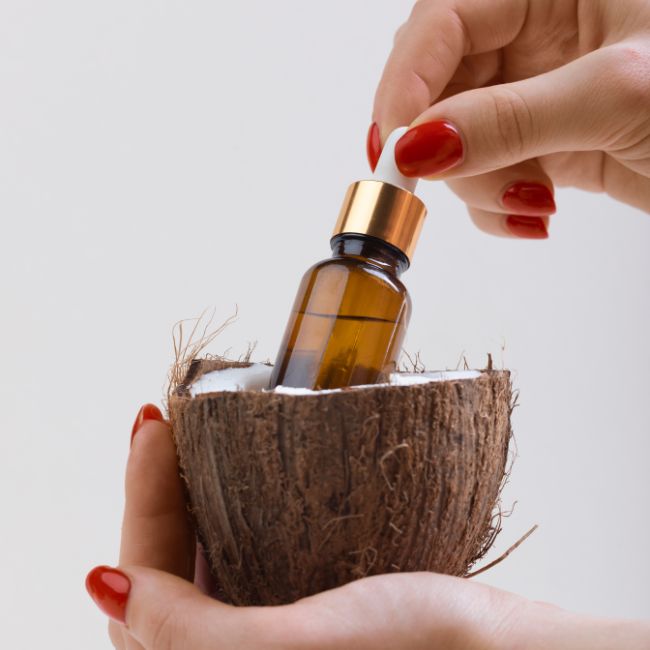
Have you ever applied coconut oil to your hair expecting spectacular results… only to end up with heavy, greasy, or flat hair? You're not alone.
Coconut oil has a reputation as a "miracle ingredient," but the reality is that it doesn't work the same for everyone. In fact, when it's not used correctly or isn't suitable for your hair type, it can have the opposite effect of what you're looking for.
The key isn't just using it, but understanding how it works, who it's truly useful for, and how to apply it correctly. Because when used properly, it can make a real difference.
Coconut oil is not just "another oil," and that's the key to why it generates so much discussion (both positive and negative).
Coconut oil stands out for its composition and molecular structure, which is rich in fatty acids, especially lauric acid. This isn't just a technical fact; it explains why it works differently from other oils.
Unlike many oils that simply coat the hair , coconut oil has the ability to partially penetrate the hair fiber. This characteristic is what makes it different in how it interacts with the hair compared to other, more superficial oils. That's why it has become such a popular ingredient in hair care routines, especially when seeking more nourishing care.
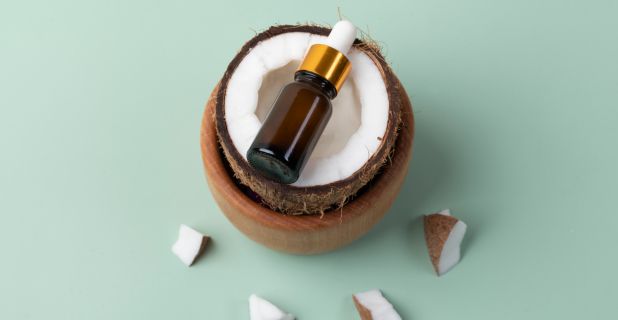
Here's one of the most important points, and where most mistakes are made. Coconut oil is thick, and as such, it's not universally suitable. It works especially well in:
Because they need that supply of lipids that helps to soften and protect the hair fiber .
This type of hair is usually more porous and tends to dehydrate easily.
It tolerates dense oils better without losing body.
But it may not be the best option if you have:
Understanding this completely changes the experience.
When used correctly and on the right hair type, these are its most interesting effects:
However, these benefits depend entirely on the amount and method of application.
To avoid disaster, order and quantity are key:
Apply a moderate amount of oil from the mid-lengths to the ends of your hair . Leave it on for 20 to 40 minutes, then wash your hair as usual, making sure no residue remains. It's the ideal way to nourish without weighing your hair down.
For extremely dry or bleached hair only. Apply a moderate amount throughout your hair. Tie your hair up or use a suitable pillowcase and wash thoroughly in the morning. Works best on thick or very damaged hair.
If you have split or very unruly ends, rub a single drop between your palms until warm and gently press it onto the ends. If you overdo it, your hair will lose volume.
Many negative results stem from these errors:
1. Applying too much product
Coconut oil is thick. Less is more.
2. Use it on the root without needing
It can saturate the scalp .
3. Not adapting it to the hair type
Not all hair types need it or tolerate it equally.
4. Not removing it properly in the wash
It may leave a feeling of dirtiness or clumpiness.
5. Expect immediate results in all cases
It's a care treatment, not an instant "salon finish" effect.
The key lies in the frequency and the context.
You can also alternate it with other, lighter treatments to avoid overloading the fiber. Think of coconut oil as a complement, not the only product in your routine.
Coconut oil isn't magic, but it can become that small gesture that transforms your routine when you really understand how and when to use it.
Because caring for your hair isn't about applying every product you see, but about learning to identify what your hair needs at any given time. Sometimes it will be nourishment, other times lightness, other times simply consistency.
And that's the key: when you choose wisely, the results change.
Just register and we'll send you a welcome email with the bonus.





 Personalised
 Beauty corner
 Universe
 Your essentials
 Special
 SUNGLASSES









 Commitment to
 Mothers
 Sunglasses





 Your beauty
 Download