 Travel
  Gift
Gift  Beauty Corner
 Viral
Viral 















OUR UNIVERSES
Enjoy and explore the themed experiences created for those who are looking for something more

Your skin sends you signals every morning: a feeling of tightness, lack of radiance, or an uneven texture that just won't improve no matter how many serums you add to your routine. Perhaps you've been trying out different cosmetic ingredients, switching products, or following viral tips on social media for a while now… and yet you still feel your skincare routine isn't delivering the results you expect. In many cases, the problem isn't the products you use, but rather the order and frequency with which you apply them.
That's where skin cycling comes in, a smart way to organize your nighttime routine that has been used in dermatology for years and has now become one of the most popular trends in facial care.
Skincycling is a four-night facial routine that alternates the use of potent active ingredients with nights of recovery and hydration. Although popularized by American dermatologist Whitney Bowe , its philosophy has long been part of the recommendations of numerous specialists.
The key to this method lies in respecting the skin barrier , the protective layer responsible for keeping the skin balanced and protected against external aggressors. When too many active ingredients are used continuously, signs of irritation such as redness, flaking, or sensitivity can appear. Skin cycling offers a simple strategy: treat the skin and then give it the necessary time to recover.

The first night is dedicated to renewing the skin's surface using chemical exfoliants (AHAs such as glycolic acid or BHAs such as salicylic acid) that remove dead cells, improve texture, and prepare the skin to better absorb the active ingredients that will come later.
If you've never used these types of ingredients before, it's recommended to start with low concentrations and gradually increase their use. Additionally, it's best to avoid combining exfoliants and retinoids in the same routine to minimize the risk of irritation.
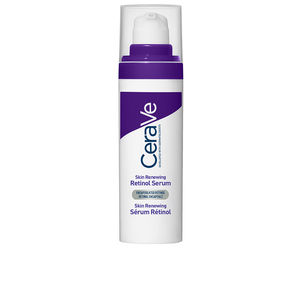
The second night is reserved for retinoids (retinol, retinaldehyde or retinoic acid), considered one of the most effective anti-aging actives in facial care.
Its use stimulates cell renewal and collagen production, visibly improving firmness, fine lines, and texture over time. If you're a beginner, retinol or retinaldehyde are good options to start with: more tolerable than tretinoin and with very noticeable results.
Apply it to clean skin and always finish with a moisturizer to minimize the feeling of tightness.
After two nights of active treatment, it's time to focus on skin recovery and barrier care. During these nights, the key ingredients are hydrating and repairing, including:
It's also a good time to incorporate nourishing creams, repairing balms, or overnight masks that help restore the skin's balance.
One of the main advantages of skin cycling is its ability to adapt to different skin needs.
If you have sensitive or easily irritated skin, skin cycling is especially useful because it limits exposure to the most potent active ingredients and prioritizes recovery nights. You can even extend the cycle to six nights (two treatment nights and four rest nights) until your skin adjusts.
If you have resilient skin or have been using active ingredients for a while, you might be able to shorten the recovery nights to just one or add other complementary active ingredients to those nights, such as vitamin C or peptides.
For those starting out in the world of skincare , skin cycling offers a simple and easy-to-follow structure, allowing the gradual introduction of active ingredients and avoiding overloading the skin.
Although it is a simple methodology, there are some common mistakes that can limit its benefits:
This last point is especially important. Both chemical exfoliants and retinoids can increase the skin's sensitivity to solar radiation, so daily use of sunscreen is essential.
It's also worth remembering that results aren't immediate. The first improvements in texture and radiance are usually noticeable after several weeks of consistent use, while changes related to firmness, fine lines, or skin tone uniformity may take several months.
Skin cycling doesn't ask you to buy dozens of products or spend hours on your nighttime routine. It asks for something much more valuable: order, patience, and listening to your skin.
Alternating nights of active treatment with recovery nights is the gentlest and most effective way to care for your skin in the long run. It's not about doing more, but about doing it better. And when your skin barrier is healthy, all the products you use—exfoliants, retinoids, moisturizers—work much more effectively.
If you've been going around in circles with your routine for a while without seeing results, perhaps you don't need to change the products. You just need to change the order in which you use them.
Just register and we'll send you a welcome email with the bonus.





 Personalised
 Beauty corner
 Universe
 Your essentials
 Special
 SUNGLASSES








 Commitment to
 Mothers
 Sunglasses





 Your beauty
 Download