 Travel
  Gift
Gift  Beauty Corner
 Viral
Viral 














OUR UNIVERSES
Enjoy and explore the themed experiences created for those who are looking for something more
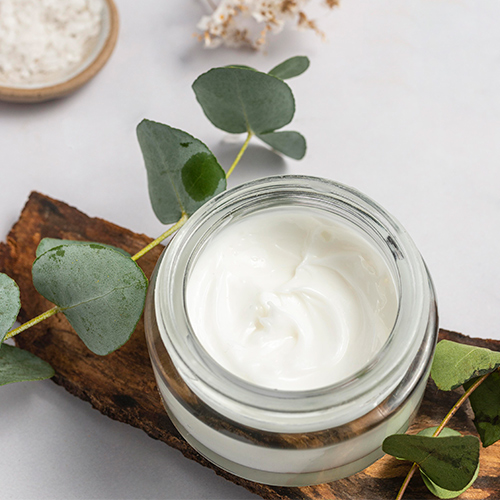
Your skin is unique and reflects much more than your appearance: it speaks to your health, your lifestyle, your stress level, and even your emotions. It changes over time, with the seasons, with what you eat, with your sleep routines, with the products you use… Therefore, there is no magic formula or universal beauty routine that works for everyone.
The secret to healthy, radiant skin begins with a simple yet powerful step: listening to your skin. Observing how it behaves, how it reacts to certain products or situations, and learning to interpret its signals (tightness, shine, redness, flaking, spots, etc.) will help you understand what it needs at any given moment.
Before choosing a product, whether it's a facial cleanser, foundation, serum, or moisturizer, it's essential to know your skin type. What works for oily skin may be too harsh for dry skin, or what soothes sensitive skin may not be suitable for combination skin.
In other words, knowing your skin is the first step toward an effective, conscious, and respectful skincare routine. And don't worry if you're still not sure exactly what your skin type is: we'll help you identify it with a complete guide to the different types.
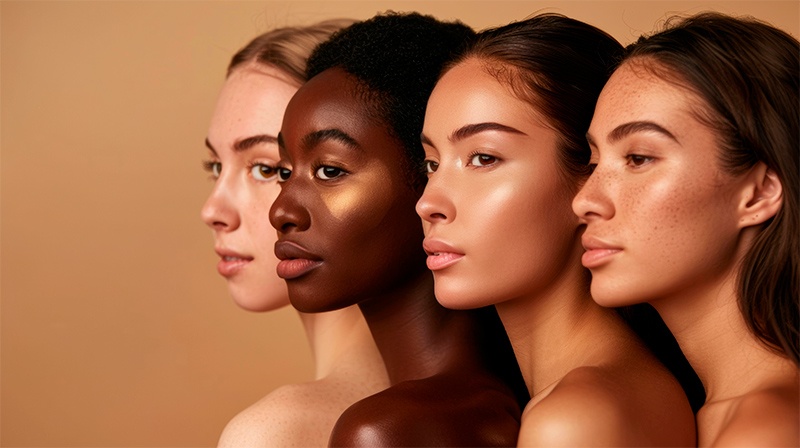
Normal skin is balanced: neither too dry nor too oily. It looks healthy, radiant, with small pores and a smooth, even texture. It doesn't show excessive shine or flaking.
It's a skin type that's more common in childhood and less common in adulthood, although some fortunate people maintain this balance thanks to good nutrition, hydration, rest, and proper care.
Although it's less demanding, it still requires gentle daily cleansing, light moisturizer, and sun protection. Avoid overloading it with unnecessary products.
It's a skin type that's more common in childhood and less common in adulthood, although some fortunate people maintain this balance thanks to good nutrition, hydration, rest, and proper care.
Dry skin produces less natural oil (sebum), which causes a feeling of tightness , roughness, and even flaking. It may appear dull and is more prone to irritation and premature aging.
It tends to have fewer blemishes , but can react negatively to aggressive products such as soaps with alcohol, strong exfoliants or extreme temperatures.
Look for products rich in moisturizing and nourishing ingredients , such as hyaluronic acid, ceramides, or plant-based oils. Creams should be thicker and more restorative. Avoid very hot water and opt for gentle cleansers.
This skin type is characterized by an overproduction of sebum , especially in the T-zone (forehead, nose, and chin). It tends to have more visible pores, shine, and is more prone to acne, blackheads, and blemishes.
Despite its appearance, it can also dehydrate , so you shouldn't skip moisturizing (although with oil-free or non-comedogenic products).
Opt for products that regulate sebum without drying out your skin, such as those containing niacinamide, salicylic acid, or zinc . Avoid heavy or oily textures and remember: less is more .
Combination skin combines oily areas (usually the T-zone) with drier or normal-sized areas (cheeks, eye contour). It's one of the most common skin types and can be challenging because it requires balancing products or even different routines for each area.
Choose specific products for combination skin or combine spot treatments. A balancing gel for the T-zone and a more nourishing cream for dry areas can be a good solution. The key is to observe and adapt .
Sensitive skin reacts easily to external factors (cold, heat, pollution) or cosmetic ingredients. It may present redness, itching, pimples, or dryness. It is not a skin type in itself, but a condition that can affect any skin type.
Less is more. Use hypoallergenic, fragrance- and alcohol-free products with soothing ingredients like aloe vera, calendula, centella asiatica, or colloidal oatmeal . Whenever you try a new product, first try it on a small area of your arm or behind your ear.
Yes, and it's totally normal—your skin isn't static . It can change with the seasons, age, stress, hormones, or even the use of certain products. Listening to your skin isn't just about looking at it; it's also about feeling how it responds . Pay attention to what it's asking for and take care of it lovingly. Because if you give it what it needs, you'll have skin you'll envy.





 Personalised
 Beauty corner
 Universe
 Your essentials
 Special
 SUNGLASSES









 Commitment to
 Mothers
 Sunglasses





 Your beauty
 Download